








API GH & KH General & Carbonate Hardness Freshwater Aquarium Test Kit
Original price was: $10.99.$9.01Current price is: $9.01.
- Your questions, our prompt answers.
- Efficient and effective customer service, online.
- 100% environmentally friendly material
- 100% High Quality Guarantee

Details
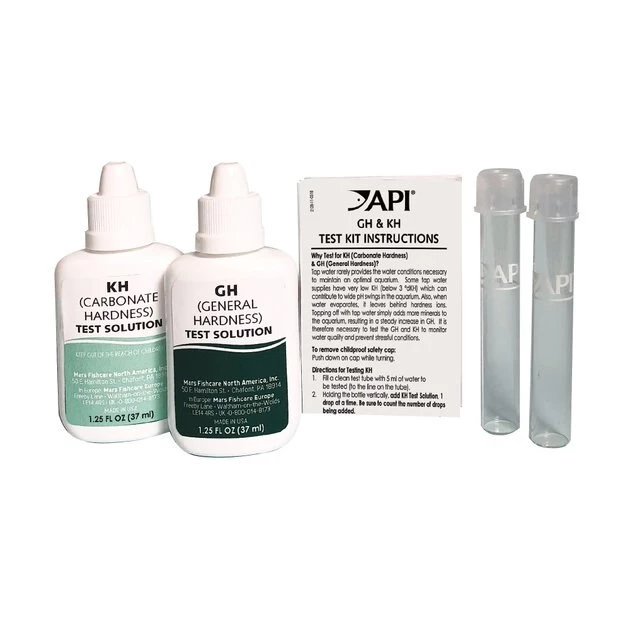
- Contains 1 API GH & KH Test Kit Freshwater Aquarium Water Test Kit, including 2 bottles of testing solution and 2 glass test tubes with cap.
- Promotes a more natural habitat and is ideal for a planted aquarium.
- Helps prevent wide, abrupt pH level changes from low KH levels.
- Helps fight crusty calcium buildup on the hood and glass of the aquarium.
- Easy to use and comes with everything you need.
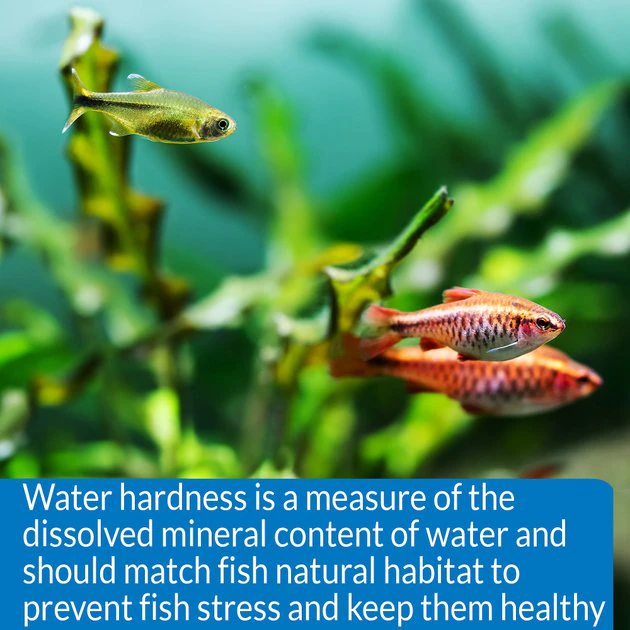
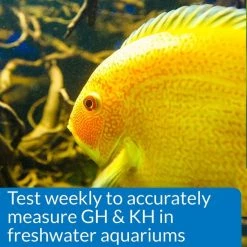
Help duplicate the natural habitat of your freshwater fish and plants by testing regularly with API’s GH & KH Freshwater Aquarium Test Kit. Water hardness is a measure of the dissolved mineral content of water and there are two types: general hardness (GH) and carbonate hardness (KH). The GH and KH of your aquarium water should match the natural habitat of your freshwater fish and your plants. This kit also helps you detect low KH levels, which can cause rapid and wide shifts in pH levels which can stress fish. This kit comes with a KH test bottle, a GH test bottle, instructions and two capped glass test tubes. Now, you can help provide a safe, hospitable environment for your fish, so they can stay healthy and thriving.
Specifications
| Item Number | 94349 |
|---|---|
| Aquarium Type | Freshwater |
| Aquarium Concern | New Aquarium and Regular Care |
| Fish Type | Tropical Freshwater, Betta, Goldfish, Bottom Feeder, Cichlid |
What’s Included
(2) liquid dropper bottles with child-resistant safety caps, easy to read instructions with information on how to test and how to correct unsafe water conditions, (2) glass tubes with snap tight caps.
Precautions
HAZARDS TO HUMANS AND ANIMALS: Causes skin irritations. Causes serious eye damage. May cause an allergic skin reaction. May cause respiratory irritation. May cause damage to organs through prolonged or repeated exposure. Do not breathe dust, fume, gas, mist, vapors, spray. Use only in outdoors or in a well-ventilated area. Wear protective gloves, protective clothes, eye protection, face protection. Contaminated work clothing should not be allowed out of the workplace.
FIRST AID: IF IN EYES: Rinse cautiously with water for several minutes. Remove contact lenses, if present and easy to do so. Continue rinsing. Immediately call a poison center, doctor, physician, or first aider. IF ON SKIN: Wash with plenty of water and soap. If skin irritation or rash occurs: get medical advice and attention. Take of contaminated clothing and wash before reuse. IF INHALED: Remove person to fresh air and keep comfortable for breathing. Store locked up. Store in a well ventilated place. Keep container tightly closed. Dispose of contents or container to authorized chemical landfill or if organic to high temperature incineration.
Instructions
For Testing KH
-
Rinse a clean test tube with water to be tested.
-
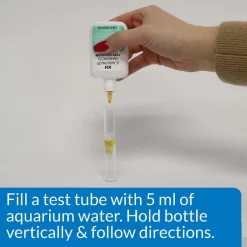
Fill the test tube with 5 ml of water to be tested (to the line on the tube).
-
Holding the bottle vertically, add KH Test Solution, one drop at a time. Be sure to count the number of drops being added.
-
Cap the test tube and invert several times after each drop.
-
The test is completed when the water in the test tube, after having been shaken, turns from blue to yellow. If you have difficulty discerning the color after the first drop of test solution is added, remove the cap from the test tube and, while holding it over a white background, look down through the tube.
-
The KH value is determined by the number of drops of test solution that must be added to turn the water in the test tube bright yellow.
For Testing GH
-
Rinse a clean test tube with water to be tested.
-
Fill the test tube with 5 ml of water to be tested (to the line on the tube).
-
Holding the bottle vertically, add GH Test Solution, one drop at a time. Be sure to count the number of drops being added.
-
Cap the test tube and invert several times after each drop.
-
The test is completed when the water in the test tube, after having been shaken, turns from orange to green. If you have difficulty discerning the color after the first drop of test solution is added, remove the cap from the test tube and, while holding it over a white background, look down through the tube.
-
The GH value is determined by the number of drops of reagent that must be added to turn the water in the test tube green.
FAQ
What is Carbonate Hardness (KH)?
Carbonate hardness, also known as alkalinity, is the measure of carbonate and bicarbonate concentrations dissolved in water. These minerals are present in municipal, well, and bottled water. The level of carbonate hardness in tap and bottled water depends on the source of the water and the treatment processes it has undergone. Carbonate hardness helps stabilize pH in the aquarium.
An aquarium with a low KH level will tend to be acidic. Aquariums with very low KH are subject to rapid pH shifts if not monitored carefully. Water with a high KH level usually has a high pH.
What is General Hardness (GH)?
General hardness is the measure of calcium and magnesium ion concentrations dissolved in water. These minerals are present in municipal, well, and bottled spring water. The level of general hardness in tap and bottled water depends on the source of the water and the treatment processes it has undergone. Hard water is high in calcium and magnesium, while soft water is low in these minerals.
Be the first to review “API GH & KH General & Carbonate Hardness Freshwater Aquarium Test Kit”
Related products


Brushes & Cleaners
Reviews
There are no reviews yet.